1871, The Birth of Honeyville
Jared Anderson and Jay Miller - copyrighted 2017
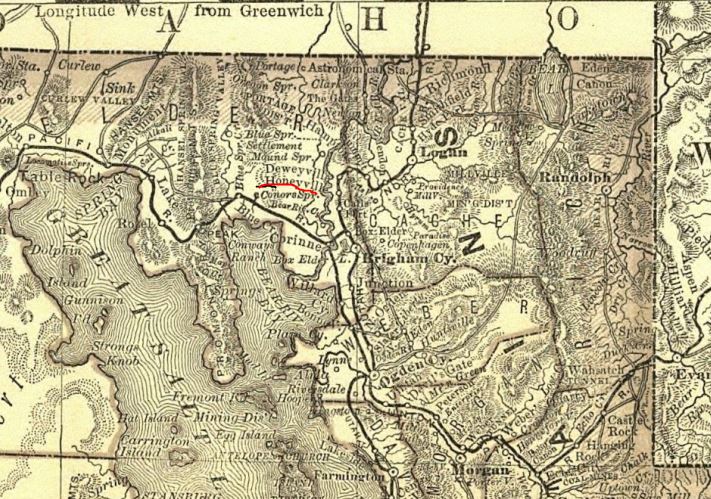
Railroad map published in 1876, date of reference 1871
Honeyville, a quaint and rural city in Box Elder County that lies in the northwest corner of the state of Utah, certainly has its share of intrigue. This little known city, perhaps more familiar to some as the rural community that surrounds the water park Crystal Springs, has been shrouded in mystery for over a century. How did it get its name? By appearance, one quickly deduced that the name originated with agriculture, specifically bees. Upon further examination of the history, this clear cut picture becomes a bit murkier, perhaps the name is derived from the name Hunsaker? To some, many of oral or written stories, legends, and journals entries only add intrigue and lore while continuing to appease the inquiring minds. Many have attempted to crack the case, but to no avail, stating to the best of their facts that many versions exist, that there may be a combination of stories where the truth could be derived, or simply quote from a journal entry of one or more of the more prominent citizens living at that time. Upon delving into this plight, one date in particular stood out being 1877; the formal date Honeyville is credited as being formed. However, if one scratches a little deeper than the surface, new dates start to appear that indicate a different tail, including in the second version of the founding fathers history. References to the moniker Honeyville do exist before 1877, suggesting that the area had been called Honeyville already before being formalized as a branch, and then ward in the Church of Jesus Christ of Latter Day Saints.
Stories, legends, and journals were obtained to find out how early the name was derived and upon what circumstances. Dates on maps and events started to appear that contradict much of the lore and mystery surrounding what is written or documented about the naming of Honeyville. However, our intention is not to undermine the names of others who have spent countless hours trying to unravel this riddle nor take anything away from the legacy that Abraham Hunsaker created . Much of what was previously written was used in gleaning and furthering ours, spurring us in new directions, perhaps ones not thought of, and just perhaps shedding new light on this cold case.
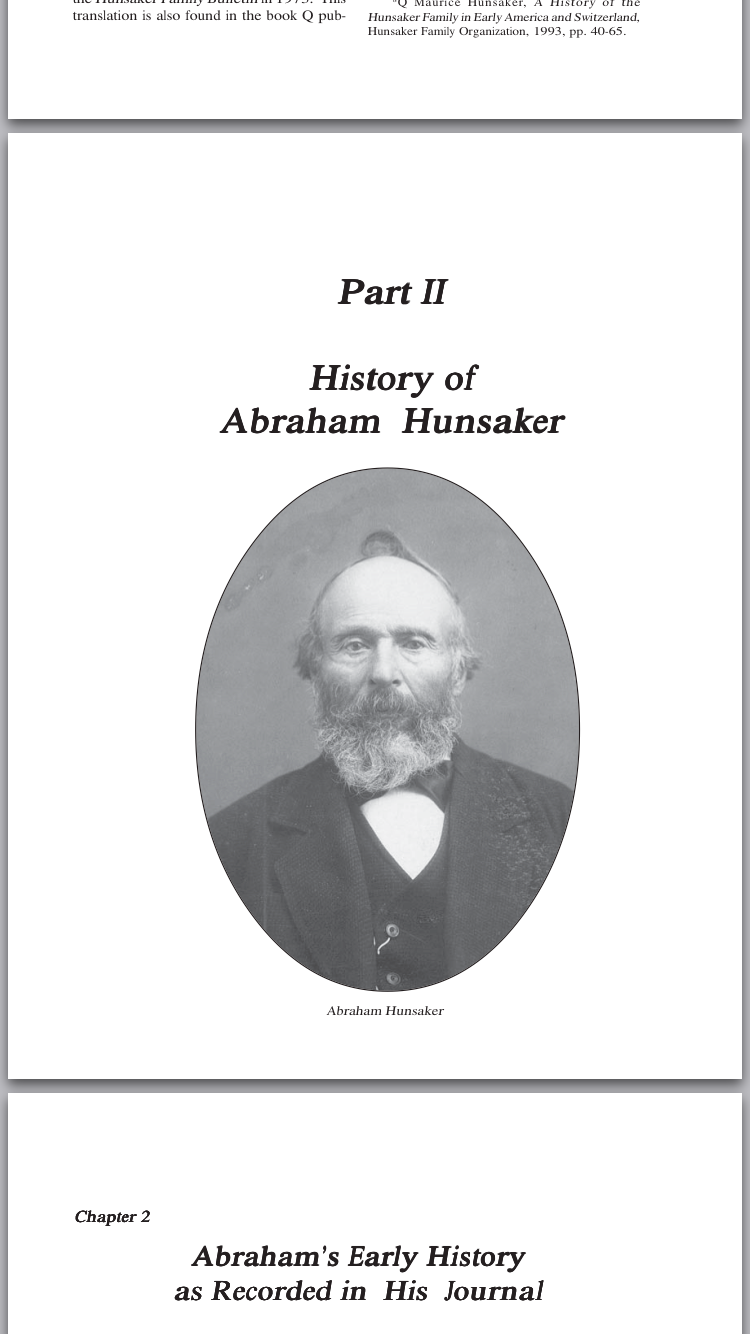
Since much of the history involves Abraham Hunsaker it is only fair to understand a little about him and his family. Although their history is well documented and begins much, much earlier than 1847, our purpose is to understand the naming of the city Honeyville.
Members of the Church of Jesus Christ of Latter Day Saints were driven from their homes in Nauvoo. While in Nauvoo, Abraham Hunsaker owned and worked in a lumber mill. While on the journey to the future state of Utah (Utah, formerly known as the Territory of Deseret, became a state in 1896 but will be used as a point of reference to help the reader) with his family he joined the Mormon Battalion to fight in the United States war against Mexico. He left his family and headed toward Mexico ending up in now San Diego. After disbanding the Mormon Battalion, because the treaty of Hidalgo was signed, his focus shifted back to helping his family traverse the plains to get to Utah. He met back up with his family with much needed supplies and arrived with them in 1848. It is worth noting that the place at which he arrived, just days before Christmas, 1847, to reunite with his wife Eliza and his children, was named Honey Creek. After settling in the Salt Lake Valley the Hunsakers were very busy with various projects. It is worth noting that other major events such as deaths, births, and marriages to members of Hunsaker family occurred during this time which are not listed in this account.
1848 Arrives and settles his family in the Salt Lake Valley
1849 Constructing a school.
1850-51 Digging canal to power a mill near the Jordan River.
1855 Famine with crickets and grasshoppers eating the settlers crops
1855 Uses the area north of Utah Lake to graze livestock
1856 In the month of May he headed out on an assignment from the leaders of his faith to settle the Carson Valley (Nevada) with his family.
1857 September 22, told by leaders of his faith to sell everything and return to Utah. He returned to Utah arriving in what is present day called Brigham City which is about 10 miles south of present day Honeyville. This journal entry depicts the family state of being after arrival in Brigham City, “FEB. 10, 1858-I have had to purchase all my bread and meat that we use for our large family, so I have some two thousand dollars left over and above the expenses of the year.” History of Abraham Hunsaker p.63.
1857 The family settles in Brigham City at the invitation of the apostle Lorenzo Snow, who also lived in Brigham City. Additional grazing land was purchased in what is present day Mantua and Little Mountain.
1858 Moved with all other members of his faith south to Utah Valley for the Mormon War. The years of 1857 and 1858 will be used again in reference to acquiring bees. Therefore, it is important that the reader understands that under such circumstances obtaining or keeping bees would prove to be beyond difficult if not impossible during this time frame. However, some of the more prominent beekeepers lived in around Utah County at the time and it is remotely possible that upon his return to Brigham City obtained bees from one of the beekeepers in the area.
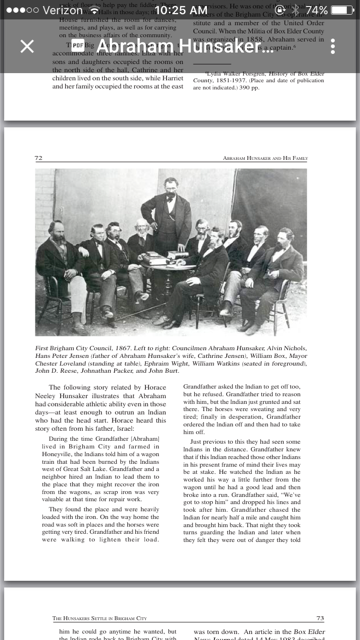
The following entry from Alvin Nichols’ History depicts the Mormon War. Alvin and Abraham were of acquaintance serving on the Brigham City Counsel at the time of charter.
“Without thoroughly investigating the situation to find out what the real conditions were, the governmental authorities in Washington, D. C. accepted the charges that were made by the accusers and sent 2, 500 federal soldiers to Utah in 1857 to deal with the supposed trouble.”
The Latter-day Saints first heard of the news when they were attending a social gathering at Silver Creek (Brighton) in Big Cottonwood Canyon. The residents of the various localities had gathered there to celebrate the tenth anniversary of the arrival of the pioneers in Utah. After the details regarding the coming of the troops were heard, the pioneer leaders decided at first to do all they could do to resist the troops, but without the shedding of blood, and as a result the Nauvoo Legion and the Utah Militia were called into action.
Not knowing what the outcome of the situation might be, the pioneers decided that if the soldiers entered the valley they would find it as barren as when the pioneers entered. They would burn everything that could be burned. They would do away with every building, every foot of lumber, every stick and tree, every stack of hay and blade of grass. Everything that could burn they would burn, for the pioneers had not forgotten how the mobbing parties took possession of their farms and houses when they were driven from Nauvoo. It now seemed as if their persecutors had followed them on to the Great Basin.
Because of the teamwork of the Militia and the Legion, the troops were unsuccessful in their attempts to enter the valley during the winter of 1857-58. The pioneer leaders felt that if other attempts were made to enter, the lives of the people might be in danger, so decided to have another general exodus or migration. They would search for another region where peace and security could be found.
1858 Abraham served in the territorial militia as a captain.
1859 Building homes in Brigham City for his family and farming.
***Shortly after arriving in Brigham City, Abraham stopped keeping his journal, or, at least to our knowledge, no journals beyond that time have surfaced. Thus, much of how Honeyville got it’s name is from second hand accounts and articles.
1861 Abraham Hunsaker buys land in now what is considered Honeyville to graze cattle.
1862 Plants wheat without direct watering (experimenting with dry farming).
1863 Abraham Hunsaker harvests between three and four hundred bushels of White Touse Wheat (not a spelling error). Thus the Hunsaker's became our first successful dry farmers and acquired the first harvesting machinery. The USAC [Utah State Agricultural College, now Utah State University] Experiment Station has this to say in Bulletin 282 [page 9] speaking of the first Box Elder dry land wheat in 1863, “Thus, dry farming, which has since spread to all states in the arid west, had its beginning.”
1863 Chief Washakie and his band signed a treaty at Fort Bridger on 2 July 1863, and "with the help of Genera l Connor, [Indian superintendent James Duane Doty gathered together ten Northwestern Shoshoni bands at Box Elder in Utah Territory and concluded the second treaty on July 30, 1863.The treaty was signed in Brigham City, the chiefs participating having gathered in the tithing yard.
1864 Abraham Hunsaker purchases the mill and builds a home near the mill on the Salt Creek where one family stayed during the summer and into the fall but moves back to Brigham City for the winter.
1864 Lorenzo Snow supervised the organization of a cooperative general store in Brigham city. By 1870, that the growing enterprise was incorporated as the "Brigham City Mercantile and Manufacturing Association." The journals indicate that Abraham owned stock.
1867 Brigham City granted a charter to become a city. Abraham is a member of city council.
1867 Grist mill built in Honeyville near the saw mill. With the coming of the railroads, the saw mill was very busy. The lumber was taken from the canyons above Honeyville, much of which was sold to the Central Pacific Railroad either “as-is”, but some was custom milled in Honeyville for a bridge near Corrinne that was never built.
1869 Attends the ceremony for the completion of the Transcontinental Railroad in Promontory, Utah.
1874 Three of Abraham’s wives become permanent residents of Honeyville living in homes near the mill, which area was referred to as Hunsaker’s Mill.
1877 Honeyville is organized as a ward on August 19, 1877 with Abraham Hunsaker presiding as bishop. Presiding at the event was Brigham Young which proved to be his last speaking event, dieing 10 days later. Legend has it that during this visit, Brigham Young pronounced his course on Corinne, “The city would go down and never regain its former size, grass would grow in the streets, the buildings would be torn down and barns would be built of the materials, and the Bear River would go dry. History of Box Elder County P. 142
Histories
There are five basic theories of how Honeyville received its name. The first being when Abraham Hunsaker declined naming the town in his honor, settlers reverted back to his profession as a beekeeper. Secondly, it’s a shortening of Hunsakerville. Thirdly, the railroad named it. Fourthly, it was a reminder of the Biblical land of “milk and honey”. Fifthly, Lorenzo Snow calls the place Honeyville in reference to the territory being called Deseret which means honeybee.
All of the theories fail to mention that the moniker Honeyville was already being used (note the first date of the journal entry below). The majority of the theories have the meeting of August 19, 1877 as the formal date of when the town was called Honeyville, which is true by formal standards. On the contrary, this line of thought is deceiving, leading the reader to think such a great name originated at the drop of a hat and does not take into account the feeling or sentiments of townsfolk towards the name and its true identity, where did it originate? Without further adieu, here is the ever growing list of references obtained of how Honeyville received its name.

There are several versions to the story of how Honeyville got its name. Most versions agree that the suggestion was first made that the settlement be named Hunsaker or Hunsakerville to honor Abraham but that he objected. Suggestion of the name of Honeyville is sometimes credited to Abraham and sometimes to Lorenzo Snow. Reasons for the choice of Honeyville as a name are varied: that it somewhat resembles Hunsaker, that Abraham kept honey bees, or that it was a reminder of the Biblical land of milk and honey since the early settlers had many beehives and dairy cattle. Abraham Hunsaker Family History. P.118.
It was first settled in 1861. An early name for the settlement was Hunsakerville for the local Mormon bishop, Abraham Hunsaker, a beekeeper. The community name was changed to Honeyville, some say to honor the profession of their bishop, and others say to remind them of their location, which was like Canaan-a land flowing with milk and honey. A combination of both of these reasons is more realistic. John W. Van Cott.
Honeyville as a settlement, dates back to 1861, when a ferry across Bear River was established at a point about 1½ miles northwest of the present site of Honeyville. Anson Call built a saw mill at Honeyville about 1861, north of the present mill site on salt creek, or Hot Springs. This mill finally passed into the hands of Abraham Hunsaker, who ran the mill quite successfully for a number of years. In an early day, when a name was wanted for the settlement, it was suggested that the place be named Hunsaker in honor of the original founder, Abraham Hunsaker, but as Brother Hunsaker himself objected to this, the name of Honeyville was adopted instead. The Honeyville settlement formed a part of the so called Call’s Fort district, but Abraham Hunsaker presiding over the few saints in Honeyville from the beginning until Aug. 19, 1877, When the saints residing in and near Hunsaker’s Mill were organized as a word named Honeyville, with Abraham Hunsaker as Bishop. Encyclopedic History of the Church of Jesus Christ of Latter-day Saints Andrew Jensen p.343.
In the 1860s Abraham Hunsaker moved one of his wives, Eliza Collins Hunsaker, and two of his sons, Isaac and Allen, from Brigham City to the new settlement, which was named Hunsakerville, in his honor. He was made the first bishop of the settlement. According to local legend, Bishop Hunsaker humbly declined the honor, and the people named the settlement Honeyville, in honor of the hives of bees kept by the bishop. Some believe the settlement was named by the settlers "to remind them of their location, which was like Canaan—a land flowing with milk and honey." Some local residents say that Honeyville is a contraction of Hunsakerville (Hun-eville), and that the shortening came with the Utah Northern's station. History of Box Elder County. P.351. With the references to John W. Van Cott
A ward was organized in 1877 with Abraham Hunsaker as Bishop. Later a name for the town was discussed. Bishop Hunsaker, along with several Stake Officers, called on Joseph Orme, to ask his advice in the matter, since he was the first permanent settler. It was suggested that the town be named after Joseph Orme, but he suggested it be named in honor of the Bishop. After some consideration, the name of Honeyville was chosen. History of Joseph and Emily Green Orme Contributed By: Lynn Payne · 19 November 2013 p.5.
Frederick J. Graham came to Honeyville from Brigham City in {1868, settling near the pond, and noted that the time there were maybe half a dozen families living in the area. Later,} in 1877, the LDS church church reorganized all stakes and districts throughout Utah. Abraham Hunsaker was called as Bishop with B.H. Tolman and Lewis N. Boothe as counselors. Later a name for the ward was discussed. Bishop Hunsaker, with several stake officers, called on Joseph Orme (because he was the first permanent settler) to ask his advice in the matter. Orme suggested that it be named in honor of the bishop. After some consideration the name Honeyville was chosen in preference to Hunsakerville, as was first suggested. The area, along with the ward, was also known as Honeyville. http://www.boxeldercounty.org/honeyville-history.htm {} added to correct the timeline.
On August 19, 1877 the Honeyville LDS Ward was organized with Abraham Hunsaker as Bishop. The first name suggested for the town was Hunsakerville in honor of Abraham Hunsaker a local beekeeper. According to some of the locals' memories and recollections, the town was originally called "Hunsakerville", but Abraham was a humble man and asked that it be given another name. In honor, then, of Abraham's profession, it was renamed "Honeyville." There are other rumors how the name came to be, including one that claims that the railroad could not fit Hunsakerville on the sign, and since the area was known for its honey production they put Honeyville on the railroad sign instead. http://www.honeyvillecity.org/admin/admpolicy/HONEYVILLE%20CITY%20GENERAL%20PLAN%202010-FINAL.pdf
Honeyville was first established in 1861 when a ferry was put across the Bear River at this location. In that same year Anson Call built a sawmill in Honeyville. He later sold the mill to Abraham Hunsaker. The place was known as Hunsaker's Mill until it was organized as an LDS ward named Honeyville in 1877. Hunsaker was the branch president in Hunsaker's Mill and then the bishop of the Honeyville Ward until 1889.[4]https://en.wikipedia.org/wiki/Honeyville,
Honeyville was named by the train workers,when passing through this area, marveled at the many colonies (bees and boxes) that dotted the landscape and thus started to call the area Honeyville, which was adopted by the townsfolk. (This is only an oral claim and no written record of this has been found.) (Thomas Packer is trying to find the reference which was part of the research for a book that his father, Gary Packer, had planned to write.)
HONEYVILLE,Box Elder County: (Alt. 4,269; Pop. 494; Settled 1866,) .Two theories exist regarding the origin of this name, 1.’ That it was Named by a beekeeper, Abraham Hunsaker, because of his interest in the honey industry. 2. That it was named by its Mormon settlers as a reminder of the Biblical land of Canaan, a land "flowing with milk‘ and honey." Origins of Utah Place Names, 3rd Compilation by Utah Writers Project. 1940 p.28.
The name of the town is a euphonious Honeyville. corruption and shortening of Hunsackerville. About 2 miles north of Honeyville, in fields east of the railroad, are some weed-grown pools. GUIDEBOOK OF THE WESTERN UNITED STATES PART B. THE OVERLAND ROUTE. WILLIS T. LEE, RALPH. W. STONE, HOYT S. GALE AND OTHERS. 1915 p.108.
Grandfather went up north of Box Elder and pioneered the country and settled down and called the place Hunsakerville. Some years later the railroad company changed the name to Honeyville. BOX ELDER LORE Published By The Box Elder Chapter Sons Of Utah Pioneers, John Hunsaker. September 1951, p.64.
Lorenzo Snow names the place Honeyville in reference to the territory being called Deseret which means honeybee. Also, the territory is heading toward statehood and is going to be called Utah instead of Deseret. The 1872 Utah Territorial Convention discussed the name to be given to the new state. The name Utah refers to a nasty insect infested, grasshopper eating tribe of Indians. Deseret is preferred to the “ugly word Utah” as described in the Book of Mormon signifying honeybee. Hunsaker oral history, no written record.
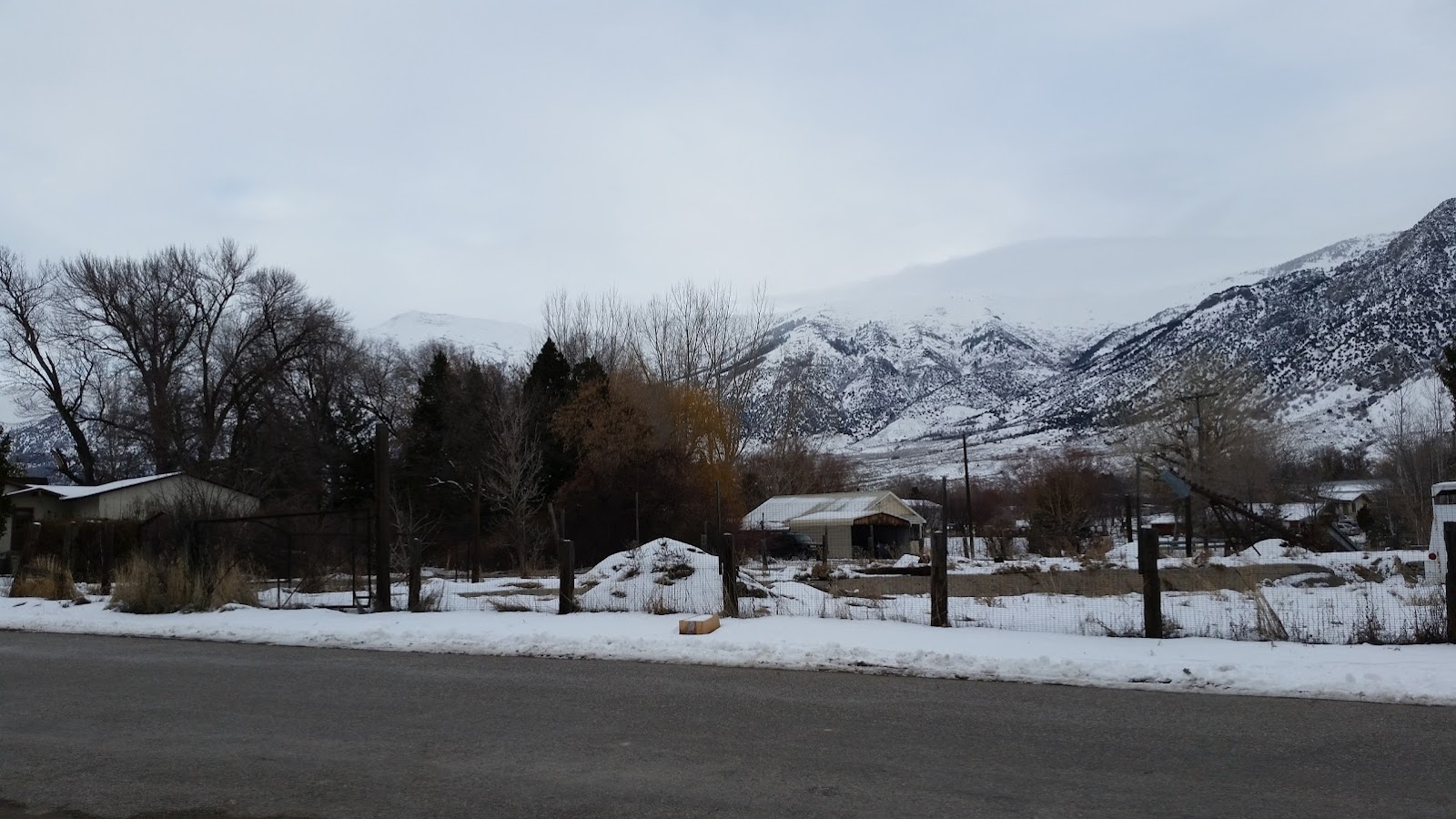
A snow covered Christmas Eve in Honeyville, Utah, 2015. Courtesy Jay Miller
What is the real story?
Watch for future updates and articles as we dissect the various theories. If you have in your possession any personal journals that help shed some light on this subject, the authors would love to have the opportunity to digitize that information for possible use in this history.